
The second-generation Megane was produced from 2002 to 2009, and these cars are still widely driven throughout Ukraine. Over the past two decades, owners have come to know their quirks well. The model has several components that tend to fail more often than others. If you know about them in advance, you can plan repairs without rushing.
It's easier to prepare for it when you have the parts on hand. Items for this series are available in the Buscenter catalog. https://buscentr.com.ua/Renault/Megane/94...and this applies to all second-generation body styles. You'll find both new parts and used parts from European cars here. Below, we'll go over common problems and the parts needed to fix them.
Where does the model have weaknesses?
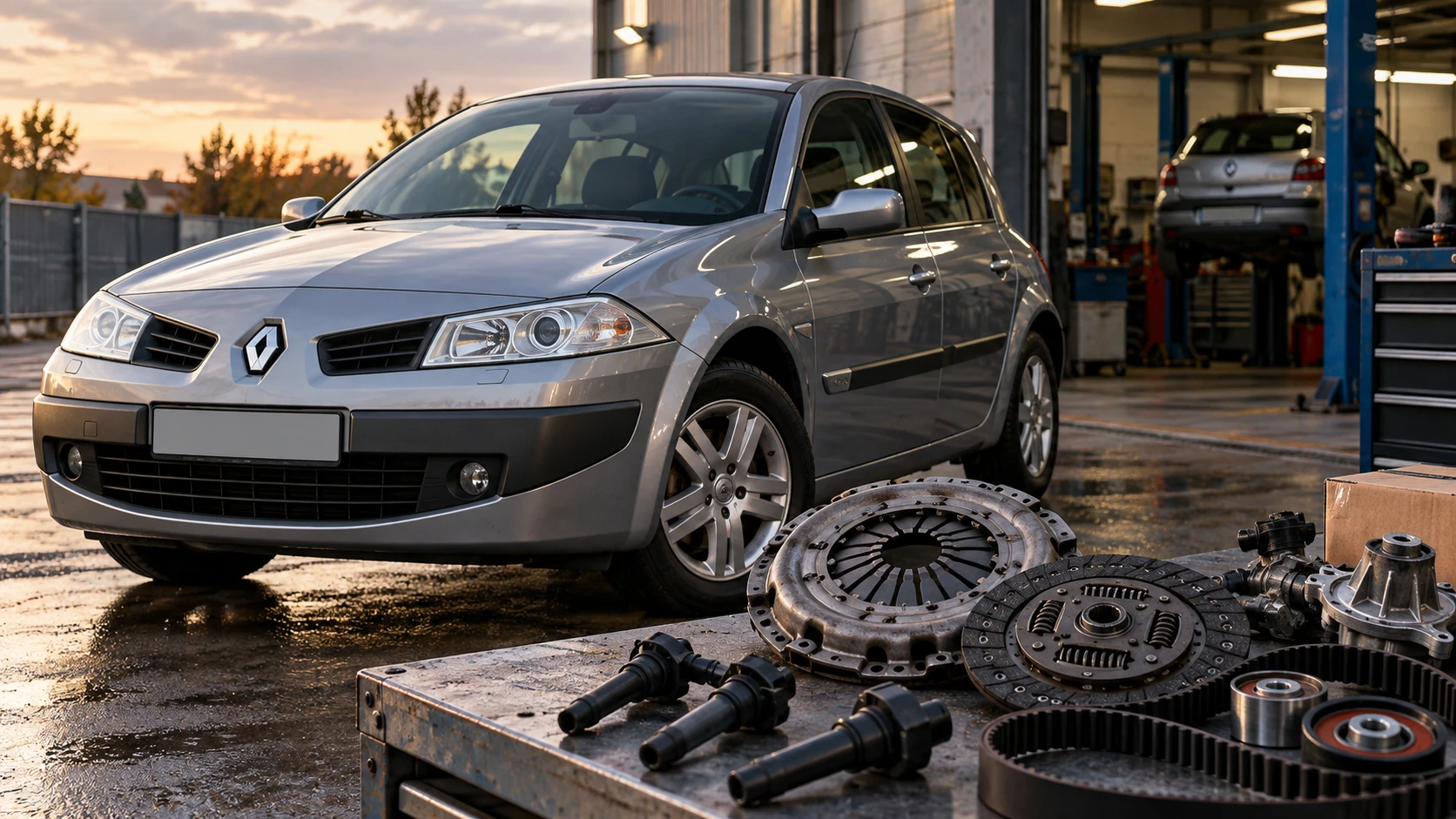
The Megane II was a mass-market car, and a great many vehicles of this series were produced. When a model has been on the road for years with thousands of owners, recurring problems quickly become well-known. That doesn’t mean the car is bad. It’s just that every model has components that wear out sooner than others. With the Megane II, mechanics are well aware of which ones these are.
Most cars in this series are more than fifteen years old. Over time, the plastic, rubber, and electrical components have deteriorated, even with careful use. Therefore, many malfunctions are due to age rather than design flaws.
Knowing the car's weak spots helps when buying and maintaining it. They are checked during a vehicle inspection, and parts are ordered in advance. That way, a breakdown doesn't come as a surprise.
Electric power steering
The Megane II is equipped with electric power steering. Over time, it may begin to malfunction, causing the steering to feel light at times and heavy at others. Occasionally, a malfunction indicator light comes on in the dashboard.
There are various possible causes. Sometimes the problem lies with the assembly itself, and other times it’s the sensor, wiring, or connector. That’s why it’s a good idea to run a diagnostic test before buying an expensive part. Sometimes the repair can be done by replacing just the connector, rather than the entire assembly.
If you need a replacement, a used part is often a sensible choice. A new power steering pump is expensive, but one from a European car will be cheaper. You’ll need to make sure it’s a perfect match for your specific model.
Window regulators
The power windows on the Megane II tend to malfunction quite often. The window starts to move in jerks, gets stuck, or stops moving up altogether. Most often, the problem lies with the mechanism or the motor.
The problem gets worse in the winter. If the window is frozen shut and the driver presses the button, the mechanism operates under excessive strain. This accelerates wear and tear.
Window regulators for the front and rear doors differ, as do those for the left and right sides. The three-door hatchback has its own set of doors. When ordering, specify the door, side, and body type.
Ignition Coils
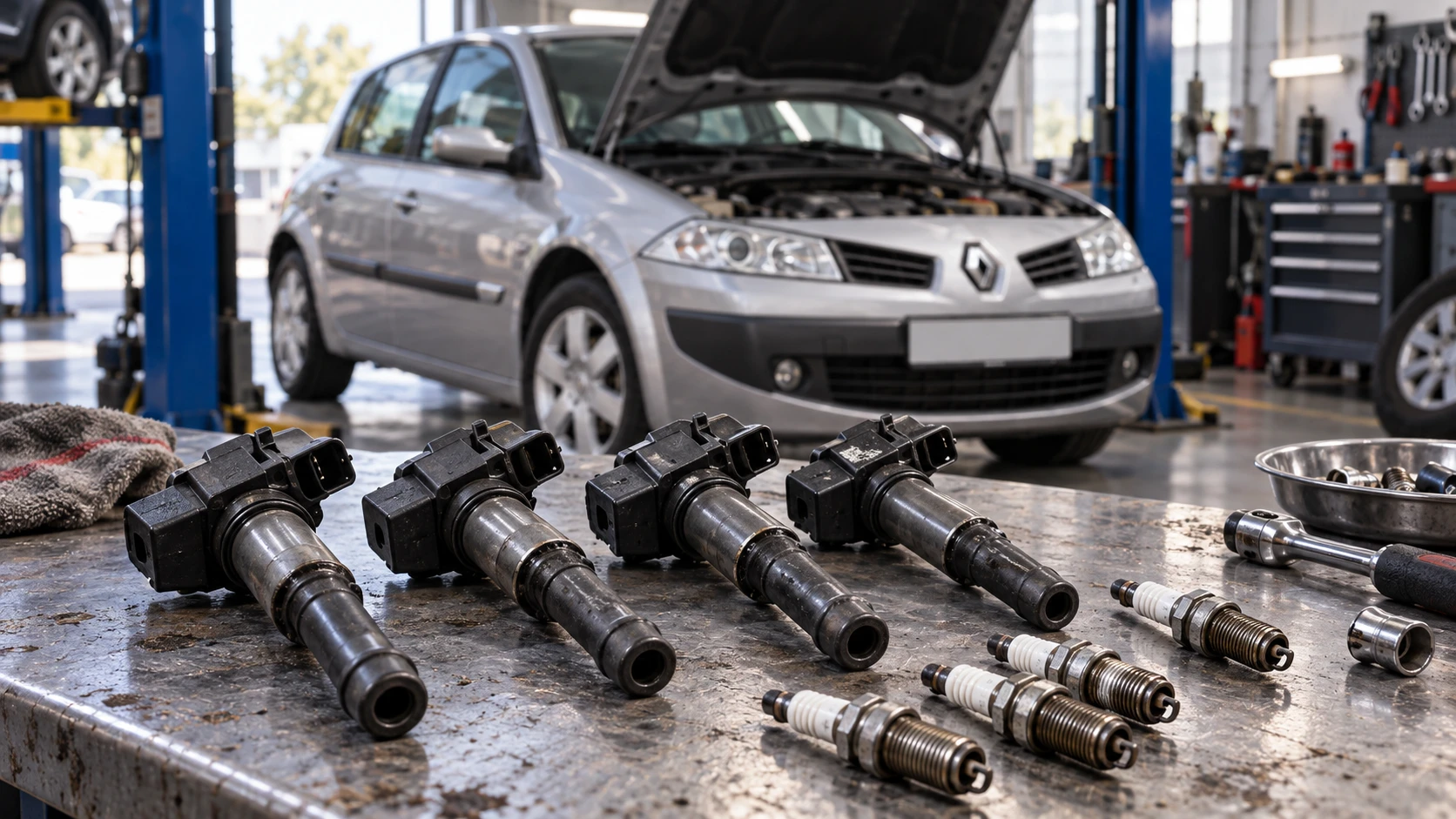
Ignition coils often fail in Megane II gasoline engines. The engine starts to misfire, loses power, and a malfunction indicator light comes on in the dashboard. These symptoms are usually more pronounced in wet weather.
You can have the coil checked at a service center in just a few minutes. If one is faulty, the others are often nearing the end of their service life as well. That’s why many owners replace them as a set.
It's a good idea to replace the spark plugs along with the ignition coils. A worn spark plug puts a strain on the ignition coil and shortens its service life. It's convenient to order both items in a single shipment.
Rear beam on a station wagon
On the Megane II station wagon, the rear crossmember requires special attention. Its silent blocks deteriorate over time, causing the car to handle unsteadily. This results in knocking noises from the rear and uneven wear on the rear tires.
The station wagon often carries cargo, so the load on its crossmember is greater. As a result, wear and tear on this version becomes apparent sooner. If the car starts to handle poorly, the crossmember is one of the first components to be checked.
Silent blocks can be replaced individually, but sometimes it’s more cost-effective to install a used, complete beam assembly. The decision depends on the condition of the metal and the fasteners. A sales representative can help you compare both options.
Second-generation motors
Gasoline versions of the Megane II are more common than diesel ones. They were equipped with 1.4-, 1.6-, and 2.0-liter engines, with the 1.6-liter being the most common. Parts for this engine are the easiest to find, and there is the widest selection of alternatives.
The 1.5 and 1.9 dCi diesel engines are more fuel-efficient, but they require some attention. Their fuel system, turbocharger, and exhaust gas recirculation valve wear out over time. These components are expensive, so they are often purchased used.
The engine determines more than just the engine components. The transmission, suspension, cooling system, and some of the attachments depend on it. That is why the fuel capacity and type must be specified in every order, even if you are not ordering an engine.
What else is often needed for an older Megane II?
In addition to known weak points, other components in a used car also wear out over time. Most of these are part of routine maintenance. Here are the items people order most often.
- Timing belt with rollers and a pump.
- Engine and transmission mounts.
- Stabilizer bar struts and control arm bushings.
- Thermostat and cooling system hoses.
- Crankshaft and camshaft position sensors.
- Windshield wiper blades and headlights.
These items in the catalog are selected to fit various second-generation engines. For most of them, both genuine and aftermarket parts are available. Body and interior parts can be purchased used.
Coupe-convertible and sedan
In addition to the hatchback and station wagon, the Megane II was also produced as a sedan and a coupe-convertible. These versions are less common, and it is harder to find body parts for them. However, their mechanical components are largely the same as those of the other body styles.
The coupe-convertible has a retractable metal roof. Over time, its mechanism—which includes motors and sensors—needs repair, and the parts for it are specialized. They can only be ordered by part number with the help of a sales representative.
The sedan has its own rear end, trunk lid, and taillights. Parts from the hatchback don’t fit it, even though they share the same front end. For rare body styles, used parts are often the only quick option.
2006 Facelift
In 2006, the Megane II was redesigned. The headlights, bumpers, and some of the wiring were updated. Pre- and post-redesign models look similar on the outside, but many of their parts are different.
There's also some confusion regarding the electrical system. After the update, part of the wiring was changed, so the connectors on some components are now different. If a part won't connect, this is often the reason.
The VIN helps determine the production period. By checking the VIN, a sales manager can see whether the car was assembled before or after a model update. This saves time and prevents returns. This check is most important for cars assembled in 2006.
How to Choose the Right Part for a Megane II
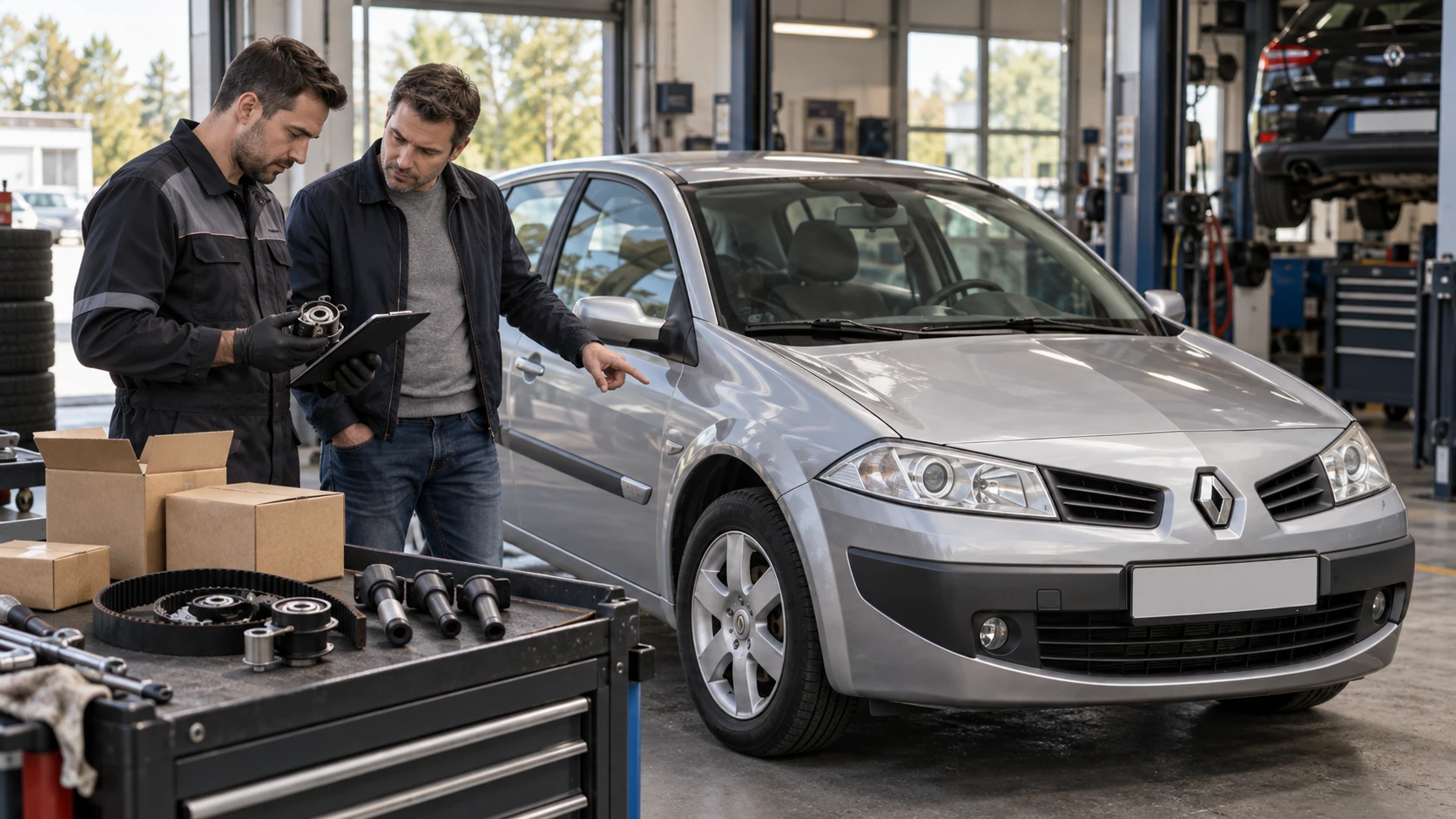
The second generation comes in many body styles and engine options, so choosing the right one requires some care. This guide will help you find what you're looking for on the first try. It will take just a few minutes.
- Specify the body style: three- or five-door hatchback, sedan, station wagon, or coupe-convertible.
- Check whether the car was manufactured before or after 2006.
- Note the engine: 1.4, 1.6, or 2.0 gasoline; 1.5 or 1.9 dCi diesel.
- Find the original part number on the removed part.
- Enter the number in the search bar or give it to your manager.
- If you have any questions, please send us the VIN for verification.
You can inspect the package at the carrier's office and pay for it only after that. This is convenient for used parts, since you can see their condition right away. If something isn't right, the return policy is described on the warranty page.
Known weaknesses, straightforward repairs
The Megane II’s weak spots have been well known for a long time, and that’s actually a plus. Owners know what to watch out for and can prepare for repairs in advance. Parts for common breakdowns are available in the catalog, both new and used.
Find your model in the Buscentr catalog and put together an order to address known issues. If you need help selecting parts, send us your chassis number, and a Buscentr manager will verify everything. Shop at the Buscentr online store, and your Megane will remain a reliable car for everyday use.