
Many drivers are familiar with the situation where the starter motor turns the engine over smoothly, but the engine won’t start. At first glance, it seems that the problem must lie with the starter or the battery. In reality, if the crankshaft turns normally, the starter is already performing its primary function. The cause must be sought in the systems that power the engine itself.
To start a gasoline engine, fuel, air, a spark, sufficient compression, and proper timing of the valve train are required. A modern car also requires correct sensor signals and authorization from the electronic control system to start. Professional recommendations for diagnosing a “crank-no-start” condition also suggest first determining exactly what the engine is lacking: fuel, a spark, or compression.

First, you need to understand exactly how to turn the starter
The sound of the engine turning over can reveal a lot even before you connect diagnostic equipment. If the starter is turning the engine at roughly the same speed as before, you should move on to checking the fuel system, the ignition, and the electronics.
Another situation is when the starter turns noticeably slower. This may be caused by a dead battery, poor contact at the terminals, corroded wires, or problems with the engine ground. DENSO, for example, points out that increased resistance in the starting circuit and dirty or corroded battery connections can significantly reduce the cranking speed.
An even more dangerous symptom is when the engine suddenly starts turning over unusually easily and quickly. This may indicate a loss of compression due to a problem with the timing belt or chain.
What to Check First
I would recommend starting the diagnostic process not by taking the car apart, but by performing a few basic checks.
- Check the fuel level. Don't rely entirely on the gauge on the dashboard. A faulty fuel level sensor may indicate that there is gasoline or diesel fuel in the tank even when it is nearly empty.
- Evaluate the scrolling speed. If the starter is sluggish, you should first check the battery and the power connections.
- Turn on the ignition and listen for the fuel pump. In many gasoline-powered cars, shortly after turning on the ignition, you can hear a distinctive sound coming from the fuel tank area, which is caused by the fuel pump. The absence of this sound does not necessarily indicate a malfunction in the pump itself, but it is a good reason to check its power supply, fuse, and relay.
- Check the immobilizer indicator. A car, key, or lock icon that flashes or stays on may indicate that the ignition is locked.
- Check the fuses. Special attention should be paid to the ECU/ECM, fuel pump, ignition, and fuel injector circuits.
- Connect the OBD scanner. Even if the "Check Engine" light isn't on all the time, errors may still be stored in the control unit's memory.
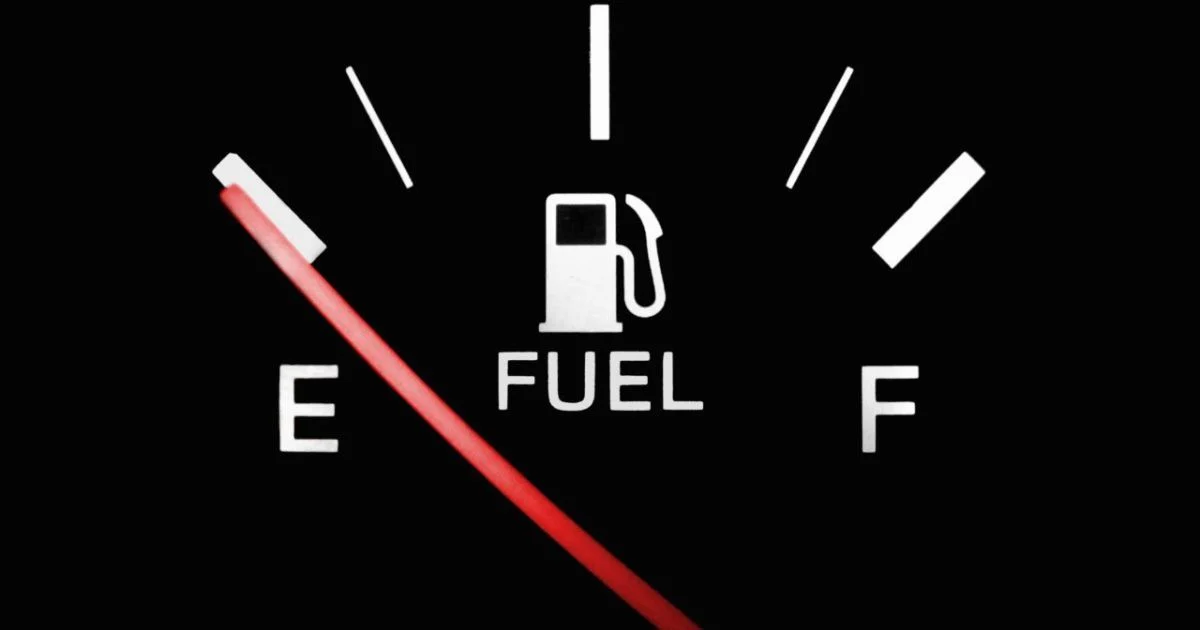
This procedure makes it possible to rule out some of the simplest causes in just a few minutes.
There is no fuel supply
One of the main causes of malfunctions when the starter turns normally is related to the fuel system. The pump may stop working entirely or fail to generate sufficient pressure. The problem may also lie with the relay, fuse, wiring, pressure regulator, or pump control system.
However, the sound of the pump running is not 100 percent proof that it is working properly. The pump may be running but not providing the necessary pressure.
The best way to evaluate the performance of the fuel system is not just to listen for the fuel pump, but to check the actual fuel pressure according to the specific engine's requirements.
If there is no pressure, you need to check the pump's electrical circuit. If there is pressure but it is below normal, check the pump, filter, regulator, and other system components.
It is particularly suspicious if, before breaking down, the car began to lose power, jerk during acceleration, have trouble starting after being parked, or stall under load.
Problems with the ignition system
For a gasoline engine, the next important aspect of diagnostics is the spark. Even with normal fuel pressure, the engine will not start if there is nothing to ignite the mixture in the cylinders.
Among the possible causes:
- defective ignition coils;
- problems with the ignition module;
- no power to the coils;
- crankshaft sensor malfunction;
- problems with the camshaft sensor;
- damage to the wiring or connectors;
- a faulty fuse or relay;
- flooded or severely worn spark plugs.
It is best to check for a spark using a special tester. ALLDATA recommends checking the quality and stability of the spark when diagnosing a "crank-no-start" condition, rather than simply verifying that a spark occurs even once.
In modern cars, a random malfunction in a single ignition coil is more likely to cause misfires and erratic performance than to prevent the engine from starting altogether. If the spark disappears in all cylinders at once, it makes more sense to look for a common cause.
Crankshaft Position Sensor
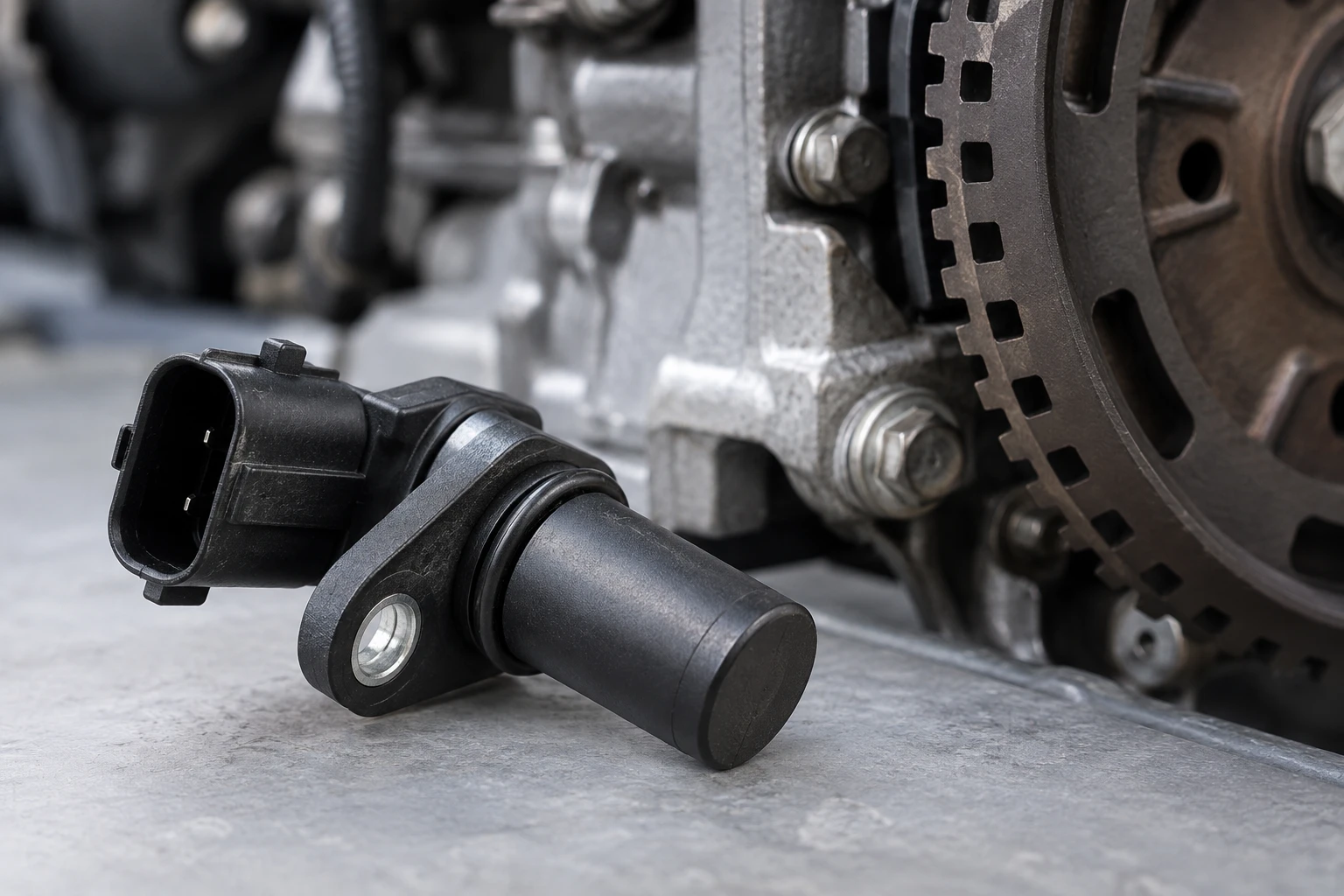
The crankshaft position sensor (CKP) deserves special attention. The electronic control unit needs to know the crankshaft’s position and rotational speed in order to properly control ignition and fuel injection.
A CKP malfunction can result in a situation where the starter operates perfectly normally, but the engine doesn't even attempt to start. Such malfunctions often occur intermittently. For example, the car starts normally when cold, but stalls after warming up, and restarting is only possible after it has cooled down.
The verification procedure could be as follows:
- Connect the diagnostic scanner.
- Check for errors related to CKP and CMP.
- Check the RPM while the starter is turning.
- Check the sensor connector.
- Inspect the wiring for damage.
- If necessary, check the sensor signal using the appropriate equipment.
At the same time, the absence of an error in the ECU’s memory does not guarantee that the sensor is functioning properly. An intermittent malfunction may occur without an obvious error code.
The immobilizer prevents the engine from starting
Drivers often forget about the electronic start lock. Even so, the starter may still function perfectly normally.
The immobilizer may cut off the fuel supply or disable the ignition system if the car does not recognize the key's transponder. On some vehicles, the engine will start for just a second in this case and then stall immediately.
Please note:
- key or lock indicator;
- a key error message on the display;
- use of an unauthorized key;
- Problems after replacing the battery;
- damage to the key;
- A malfunction in the immobilizer antenna.
If you have a spare key, you can try starting the car with it. This is a simple test that can sometimes help you avoid unnecessarily replacing expensive parts.
Could the battery be the problem?
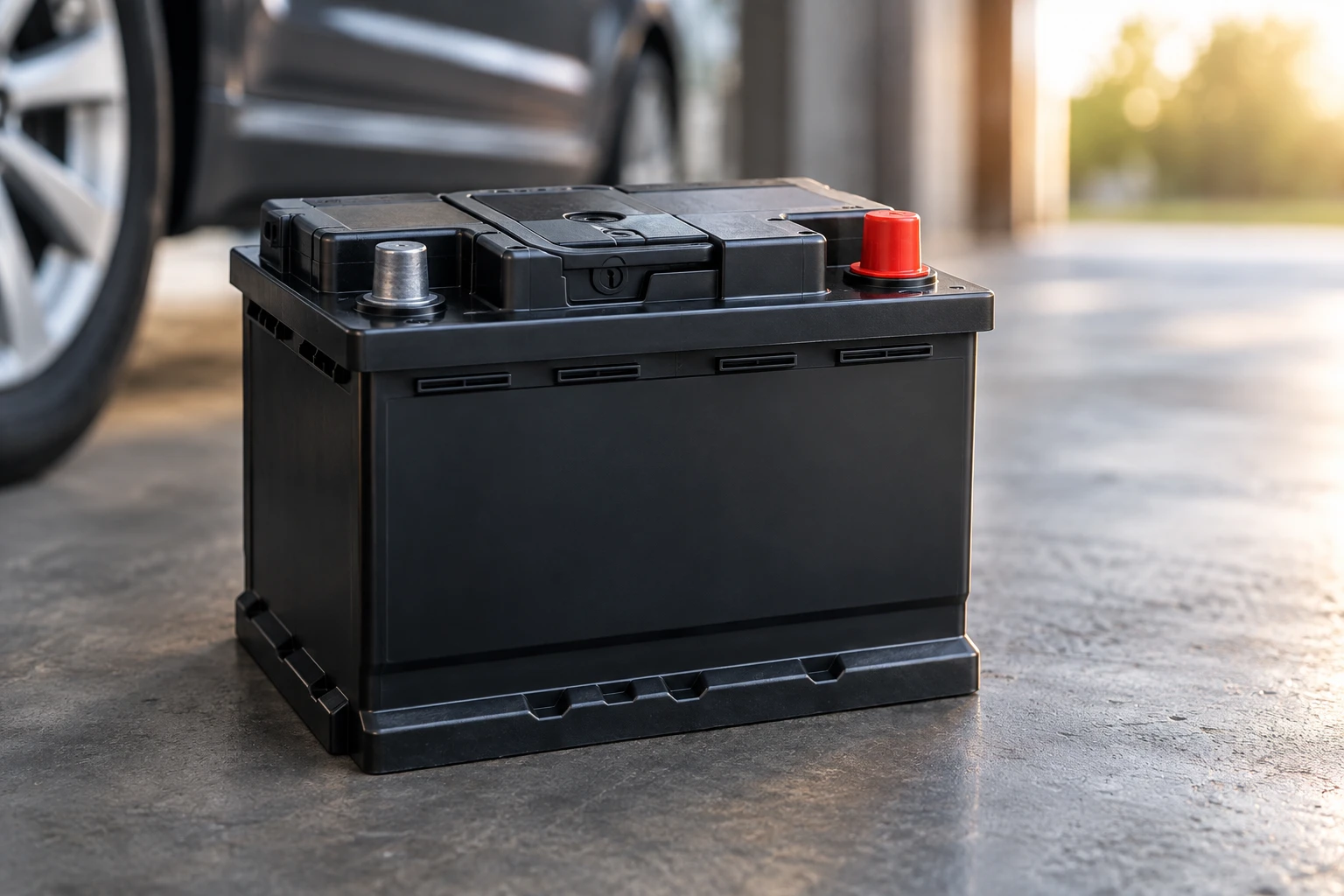
Maybe, even if the starter is turning. For the electronics in a modern car, it's not just the ability to turn the starter that matters, but also the voltage in the vehicle's electrical system under load.
A weak battery is sometimes still capable of turning the engine over, but the voltage drops so much during startup that the electronic control modules, coils, or other components do not function properly.
Therefore, if you suspect a battery issue, you should check the following:
- battery voltage before starting;
- the voltage immediately while the starter is running;
- state of the positive terminal;
- the negative terminal;
- ground wire between the body and the engine;
- voltage drop across the power lines.
This check is especially important in the winter or after the car has been parked for a long time.
Fault in the timing belt or timing chain
This is one of the most serious causes. The camshaft and crankshaft must rotate in sync. If the timing belt breaks or slips, the valves will not operate correctly, which can cause the engine to lose compression and fail to start.
If, after a sudden stall, the engine turns over unusually easily and quickly with the starter, there is no need to try to start it repeatedly. First, you should rule out damage to the timing drive.
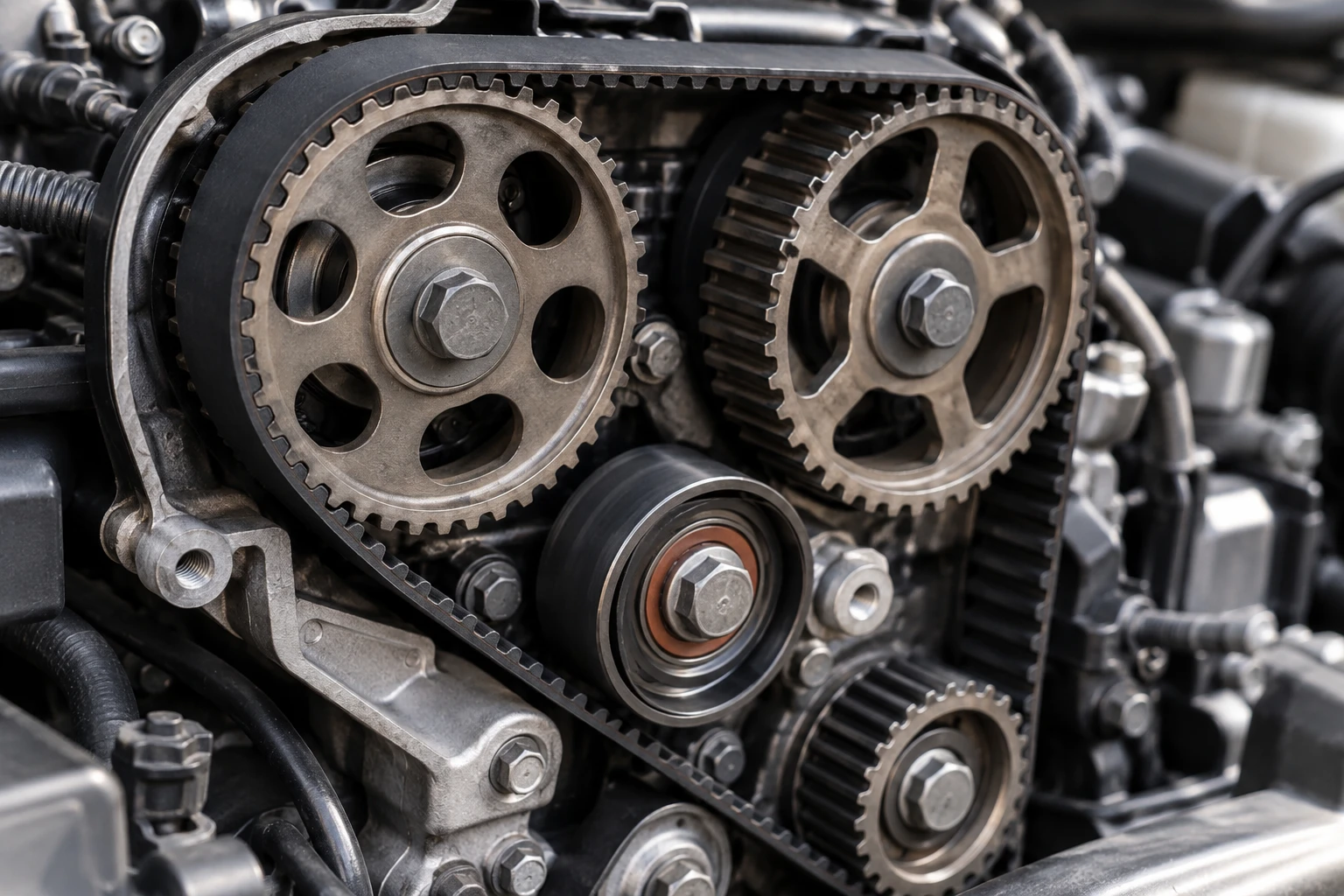
In engines where valve-to-piston contact is possible if timing is lost, a timing system malfunction can result in costly repairs to the cylinder head.
Low compression
If fuel is being supplied, there is a spark, and the electronic system detects engine rotation, but the engine won't start, you need to check the mechanical components.
Sufficient compression is necessary for the mixture to ignite properly in the cylinder. A significant drop in compression may be caused by timing issues, valve damage, problems with the piston assembly, or other mechanical malfunctions.
What a car's behavior can tell you
| Symptom | Possible Focus of the Audit |
|---|---|
| The starter turns fine, but the engine won't start at all. | Fuel, spark plug, CKP, immobilizer |
| The starter turns very slowly | Battery, terminals, ground, starter |
| The engine revs unusually fast | Compression, Timing Belt, or Timing Chain |
| The engine sputters and then stalls immediately | Immobilizer, Fuel, Electronic Control |
| I can't hear the fuel pump | Fuse, relay, wiring, pump |
| There's a smell of gasoline after numerous attempts | Check for a spark; the spark plugs may be flooded |
| It won't start when it's hot | CKP, CMP, fuel pressure, electronics |
| It starts after the ignition has been turned on a few times | Check that the fuel system maintains pressure |
| Before coming to a stop, the car jerked | Fuel system, sensors, ignition |
This table is not a substitute for a diagnosis, but it helps point you in the right direction.
When Is It Best to Stop Trying to Start It?
It’s not always advisable to try to diagnose every problem right on the side of the road. If simple checks haven’t yielded any results, and further diagnostics require measuring fuel pressure or compression, checking sensor signals with an oscilloscope, or disassembling timing system components, it’s best to take the car to a service center.
You should especially avoid taking any risks if you heard an unusual mechanical noise right before the engine stalled, if the engine suddenly cut out while you were driving, or if the starter now turns it over much more easily than before.
If your car breaks down on the road and you can't figure out the cause on your own, it's safer to arrange for the car to be towed. In Odessa, you can use the services of tow truck in Odessa, especially if there is a suspicion of a problem with the timing system, the fuel system, or another malfunction where further attempts to start the engine are not recommended.