
How will installing a downpipe change the turbo's response and the feel of acceleration?
The downpipe is integrated into the exhaust system between the turbocharger and the catalytic converter. Unlike factory-installed parts, it has a larger inner diameter, which significantly reduces exhaust flow resistance. As a result, exhaust gases leave the turbocharger more quickly, allowing it to build up pressure sooner and more efficiently. This is precisely why drivers of turbocharged vehicles turn to specialized service centers to have this part installed. Demand for this service is highest in Kyiv. Downpipe Installation in Kyiv This work is performed at specialized service centers, as it requires strict adherence to the installation procedure. During replacement, it is important to install all gaskets correctly, ensure the connections are airtight, connect the oxygen sensors properly, and check for exhaust gas leaks. Even minor mistakes can lead to ECU errors, reduced turbocharger efficiency, unusual noises, exhaust gas leaks, or costly repairs to the engine and turbocharger. That is why downpipe installation should only be entrusted to specialists with experience working on the specific vehicle model.
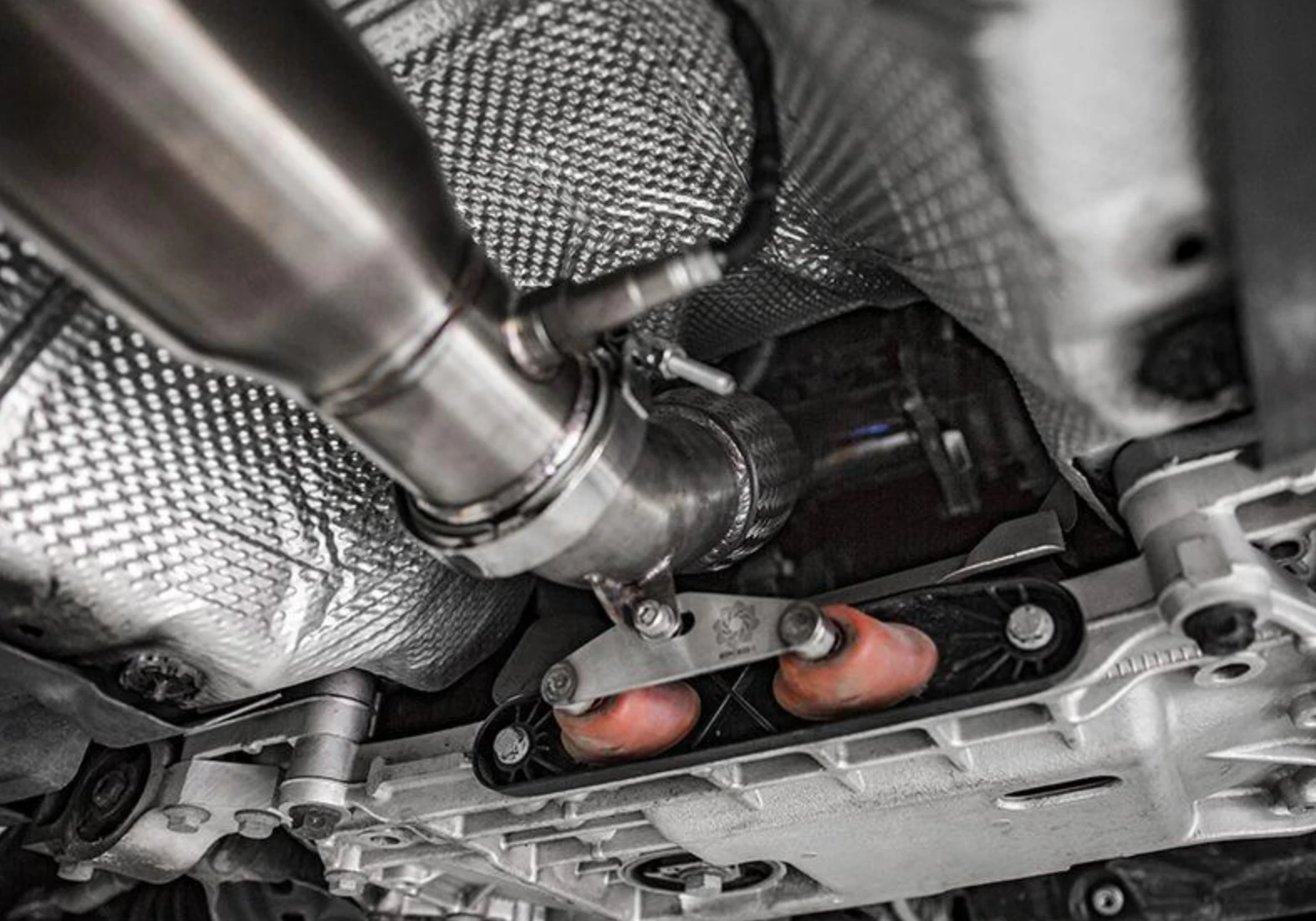
Why Does the Factory Configuration Limit the Turbine's Potential?
Most production cars are equipped with an exhaust system designed to strike a balance between fuel efficiency, catalytic converter lifespan, and noise levels. Manufacturers deliberately restrict the flow through the exhaust tract to meet environmental standards and reduce production costs. As a result, the turbocharger does not reach its full potential: excess pressure builds up between its outlet and the rest of the system, slowing down the turbine’s rotation.
This operating mode manifests as a characteristic “lag” when accelerating. The driver presses the pedal, but power builds up with a delay rather than instantly. This phenomenon is known as turbo lag. It is particularly noticeable at low and medium engine speeds, when the turbocharger has not yet reached operating speed.
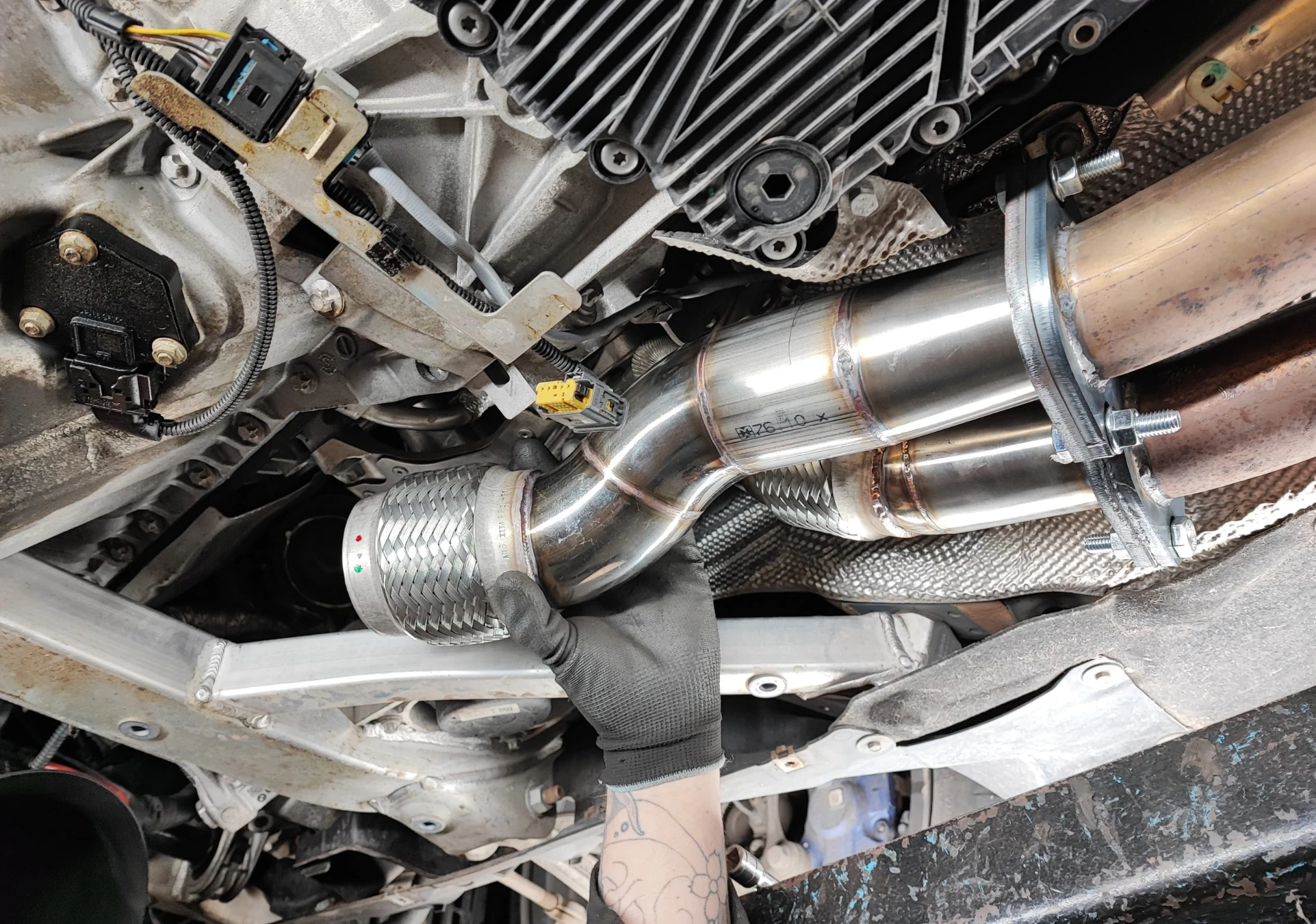
What Changes After Installing a Downpipe
After replacing the stock exhaust pipe with a downpipe that has a larger cross-sectional area, several noticeable changes occur in the car's handling:
- The turbo builds pressure faster, and the throttle response becomes more responsive;
- "turbo lag" is reduced or eliminated entirely, depending on the engine design;
- Acceleration feels smoother, without any sudden dips between the phases of acceleration;
- the sound of the exhaust system takes on a deeper, richer tone;
- In some cases, a reduction in fuel consumption on the highway has been observed.
Another effect relates to peak power. When the back pressure at the turbine outlet decreases, the turbine is able to move a greater volume of air per unit of time. This directly affects cylinder filling and the efficiency of fuel-air mixture combustion.
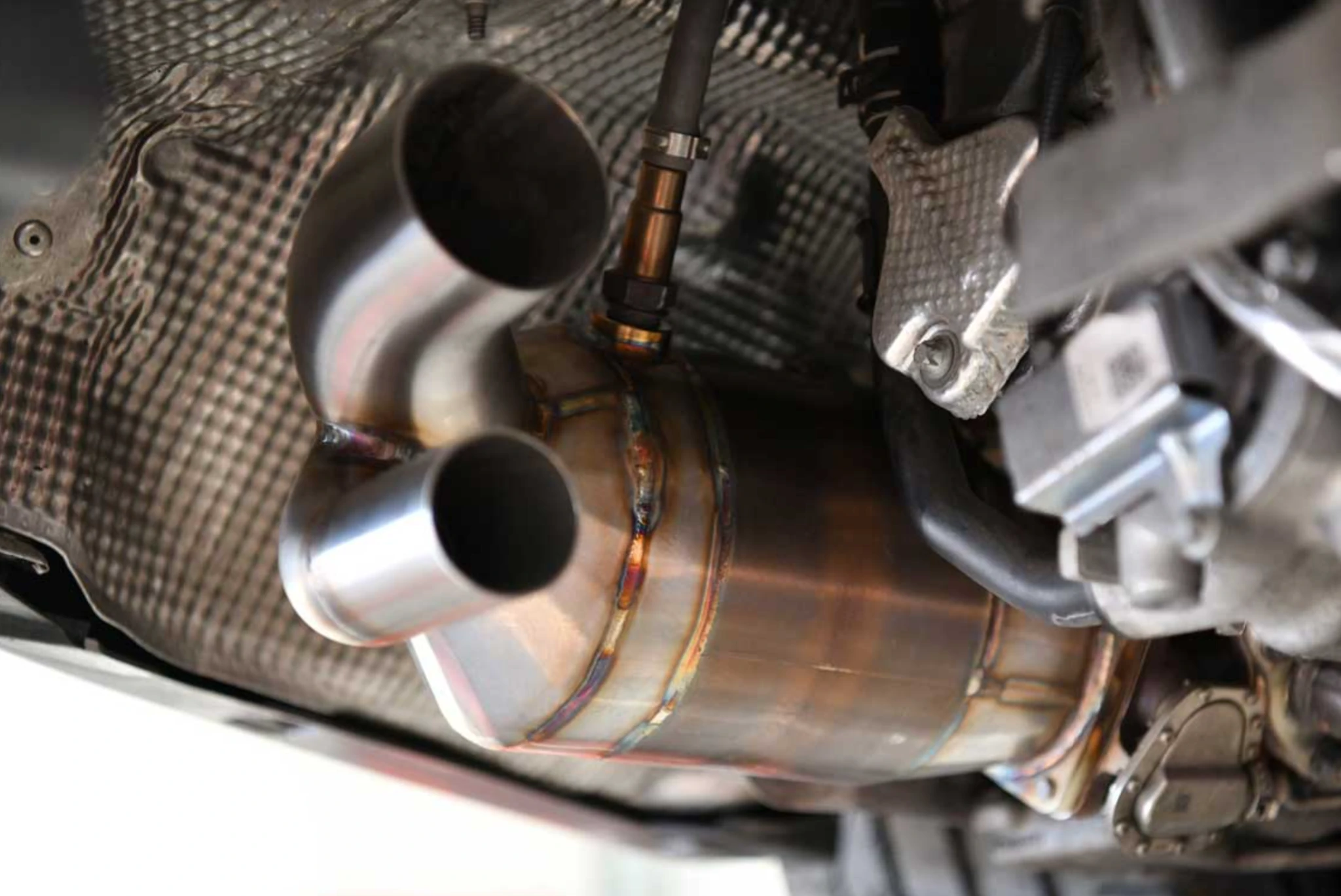
How Is a Downpipe Installed at an Auto Repair Shop?
For this work, it is best to contact auto repair shops that specialize exclusively in exhaust systems. They have the necessary equipment and qualified technicians. The installation is carried out in several consecutive steps:
- a vehicle inspection must be conducted;
- The condition of the existing system is assessed;
- The details of the order are finalized;
- Standard structural components are removed;
- the necessary measurements are taken;
- The downpipe is custom-made for a specific car.
High-quality stainless steel is used in the manufacturing process. Joints are made using argon arc welding, which produces welds that are resistant to thermal stress and corrosion. After installation, the engine control system software must be reprogrammed; otherwise, without recalibrating the ECU, the benefits of the installed pipe may not be realized, or the system may display an error.
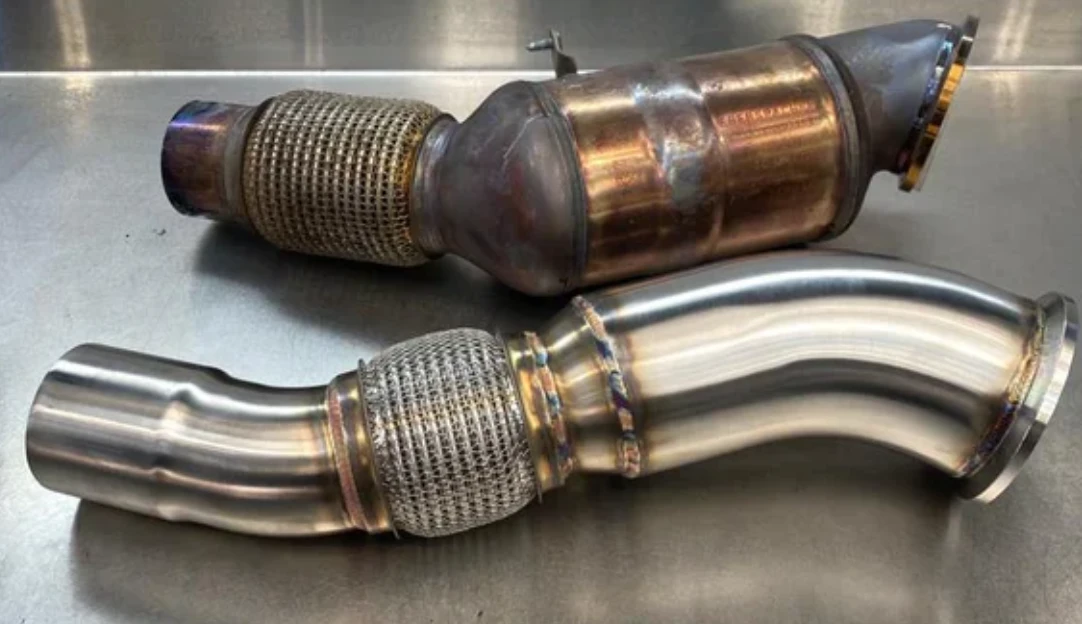
The final step is to check the leak-tightness and performance of the entire assembly. The downpipe is custom-made for each order, as off-the-shelf solutions are rarely available because the geometry of the under-hood space varies from model to model.
Installing a downpipe is particularly beneficial for owners of turbocharged cars who want to get more out of their engine than the standard setup allows. It pairs well with second-level chip tuning, as together they remove several limitations at once: the firmware expands the boost pressure limits, while the downpipe ensures unimpeded exhaust flow without backpressure buildup.